Pseudoscorpions are a type of arachnid, meaning that they are not insects, but are closely related to spiders. They are named “Pseudo” scorpions because they have pincers that resemble scorpions, but do not have a tail and stinger. They can be found anywhere from a tree canopy, to somewhere in your home where they feed on the larvae of some household pests. They can also be found in leaf litter, where they feed on other tiny arthropods. Males use chemicals known as pheromones, and a fancy dancing behaviour, to attract females to mate. These arachnids construct a silken cocoon which they use to protect themselves during the winter. Pseudoscorpions occur all over the planet, but are rarely collected in Malaise traps. In total, only one specimen was collected during the Fall 2014 School Malaise Trap Program, by Chesley District Community School. For an interesting video of a pseudoscorpion hunting, click here.
Brrrrrr it’s getting cold outside, and what better way to kick off the year than with an insect order which contains a few species who genuinely enjoy the cold (to an extent!). Meet the stoneflies!
Stonefly (Leuctra sp.)
The Plecoptera are an order of insects, commonly known as stoneflies. There are approximately 3,500 species found worldwide, except in Antarctica. Almost all species of stoneflies develop as nymphs in clean, moving water and are intolerant of water pollution. Their presence in a stream or still water is therefore a good indicator of excellent water quality. Once hatched from the eggs, stonefly nymphs usually complete their development within a year, but many take longer. Some larger species may spend two to three years as nymphs before crawling out of the water as adults.
Taeniopteryx – Winter Stonefly by Kris & Fred
Once they emerge from the water, adult stoneflies will usually spend their lives within close proximity to the water’s edge. Unlike the outstretched wings of dragonflies and damselflies, stoneflies fold their wings neatly against their backs when at rest and are generally not strong fliers. The name “Plecoptera” literally means “braided-wings”, from the Ancient Greek plekein (« to braid ») and pteryx (« wing »). This refers to their complex pleated, or fanlike broad hind wings.
Congratulations to Carleton North High School for collecting the only species of stonefly found during the Fall 2014 School Malaise Trap Program!
The Hymenoptera are one of the largest orders of insects, comprising the sawflies, wasps, bees and ants. Over 150,000 species are recognized, with many more remaining to be described. The name refers to the wings of the insects, and is derived from the Ancient Greek ὑμήν (hymen): membrane and πτερόν (pteron): wing. During the Fall 2014 School Malaise Trap Program you collected 1058 species of Hymenoptera across all participating schools. We have highlighted some of your interesting finds below.
Fairyfly (Anagrus ustulatus)
Fairyflies, despite their name, are actually very tiny wasps, and can be found in temperate and tropical regions throughout the world. They average only 0.5 to 1.0 mm long and they include the world’s smallest known insect, the Alaptus fairyfly, with a body length of only 0.139 mm, and the smallest known flying insect, at only 0.15 mm long.
While many insects form complicated social groups – think of ants and bees, for example – the fairyfly is just the opposite. Although they get together for mating, there’s no courtship and no family groups among fairyflies. This makes them relatively hard to study, which is why much of their behavior is still a mystery to scientists.
Fairyfly (Anagrus ustulatus)
Fairyflies are some of the most common chalcid wasps, but are rarely noticed by humans because of their extremely small sizes. This apparent invisibility, their delicate bodies, and their hair-fringed wings have earned them their common name. Their adult lifespans are very short, usually lasting for only a few days. All known fairyflies are parasitoids of the eggs of other insects, and several species have been successfully used as biological pest control agents.
Fairyflies were abundantly caught during the Fall 2014 School Malaise Trap program, with specimens being collected at 49 of the 59 participating schools!
True bugs are an insect order scientifically known as Hemiptera with about 80,000 species. You might know representatives such as cicadas, aphids, planthoppers, leafhoppers, and, most prominently, stink bugs and bed bugs. In the Fall 2014 School Malaise Trap Program, the leafhoppers (family Cicadellidae) were the most diverse group, with 158 species collected. Aphids (family Aphididae) were in second place with 119 species, which included a number of interesting species.
Aphids are small, soft-bodied insects with sucking mouthparts called stylets that allow them to pierce plant tissue and suck out the sap. Depending on the plant species and extent of the attack, aphid feeding can lead to yellowing, curled leaves, stunted growth, and even death. The soybean aphid (Aphis glycines) was one of the most widely collected species of aphid, being found in traps at 21 different schools, primarily in Ontario. The soybean aphid is native to Asia but it has become a serious pest of soybean in North America since 2000. Interestingly, the Halloween lady beetle (Harmonia axyridis), which can help to control the soybean aphid and is also an introduced species, was collected at 18 schools in this Fall program.
With little natural protection from predators, aphids employ various mechanisms to avoid predation. Species collected in the Fall program exhibit a few of these mechanisms, including two Tetraneura species that can cause plants to form galls, abnormal swellings of plant tissue, wherein the aphids can survive. Multiple species of woolly aphid (subfamily Eriosomatinae), which excrete a waxy, woolly-looking covering that provides protection from predators, were also collected.
Norway maple aphid (Periphyllus lyropictus)
Aphids are not only pests of agricultural crops, they can also damage trees. Collected in the Fall program, the Poplar leaf aphid (Chaitophorus populicola) feeds on poplars and cottonwood while the Norway maple aphid (Periphyllus lyropictus), as the name suggests, feeds on Norway maples. Another interesting find were three species of giant conifer aphids (Cinara spp.), some of which are known to attack Christmas trees and, because they can survive freezing temperatures, they can remain on the trees on route to consumers, becoming a nuisance during the holidays.
While Malaise traps are most useful for capturing flying species, 69 species collected in the Fall School Malaise Trap Program were spiders which certainly don’t fly! These 69 spider species belonged to 57 different genera of 21 families – a very diverse group! Westside Secondary School in Orangeville, Ontario collected the greatest number of spider species with 14.
Cellar Spider Sp.
One very interesting find of the Fall program was the spider species Pholcus manueli which was collected at Glendale Secondary School in Hamilton, Ontario and represents the first record of this species from Canada! Pholcus manueli is a cellar spider, belonging to the family Pholcidae. Cellar spiders are often confused with harvestmen (order Opiliones) and share the common name of daddy longlegs. Cellar spiders and harvestmen are rumoured to be some of the most venomous animals in the world but they are, in fact, harmless to humans. Cellar spiders typically live indoors where they build webs and hang upside down, waiting for their insect prey.
Cellar spider (Pholcus manueli)
In previous years, occurrences of Pholcus manueli were restricted to Asia and to the southern regions of the United States. However, within the past five years, the range of this species has expanded to the midwestern United States, particularly Ohio, where it has taken the place of another invasive species, Pholcus phalangioides, and become very abundant in barns, sheds, and basements. The collection of this species in Hamilton with the School Malaise Trap Program suggests that it is continuing to spread northward, potentially due to climate change. The quick spread of Pholcus manueli may seem surprising particularly when you consider that this species is not known to disperse through ballooning, where a spider produces a ‘parachute’ out of silk threads that can carry it in the wind for long distances. However, this species may be able to disperse long distances through phoresy, where one animal attaches to another, perhaps a mammal or bird, for transport. Can you think of other ways that this spider species could have arrived in Canada?
Check out our Fall 2014 Detailed Program Report here!
The results are in for the Fall 2014 School Malaise Trap Program and they are truly remarkable! This Fall marked the first nationwide offering of the program, with students from across Canada exploring the biodiversity in their schoolyards and discovering how we can use DNA barcoding to inventory life on our planet. In all, 2,479 students from 92 classrooms, 59 schools, 46 cities, and 6 provinces and territories participated in the program. The 59 Malaise traps collected specimens from September 22 to October 3.
The 59 traps on average collected 1,034 specimens for the collecting period. Our staff sorted 61,052 specimens and 13,846 of these primarily insect specimens were barcoded. The DNA barcodes allowed us to determine that 3,402 species were collected over the two week period of the program, more than twice as many as any of our previous School Malaise Trap Programs! We are excited to report that 324 of these species were brand new to our DNA barcode library (BOLD), representing a significant contribution to the International Barcode of Life project.
Not only were your collection numbers astounding, your species discoveries were even more exciting! Over the next few weeks the SMTP team will be highlighting your discoveries through our blog posts and we hope that you will do the same! First off, let’s get a sense of what you collected in your Malaise trap.
Most of the 3,402 species that you collected were arthropods — invertebrates with a hard external skeleton. If you look at the pie chart below, you’ll notice that many (36%) of the species were flies (scientific name: Diptera). Some groups of flies were particularly diverse; there were 285 species of midges (Chironomidae), 116 species of fungus gnats (Sciaridae), and 95 species of scuttle flies (Phoridae). In addition, just like Fall 2013 and Spring 2014 programs, the most abundant species was a midge. After flies, the next most species diverse group was bees, wasps, and ants (Hymenoptera), followed by the true bugs (Hemiptera). Most of the species in these groups have wings, so it’s not surprising that they were collected in your Malaise traps. However, you also collected some groups that don’t fly such as springtails (Collembola), spiders (Araneae), and snails (Stylommatophora).
Stay tuned for our Fall 2014 interesting species discoveries!
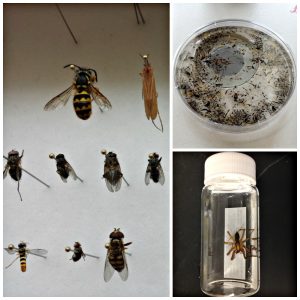
An array of pinned specimens ready to be sampled for DNA barcoding
One of the main questions that we receive from educators who are participating in the School Malaise Trap Program is « how do I discuss the ethics of insect collection and study with my students? » This is an excellent question which we are hoping to address during this blog post.
Upon researching this topic, we came across an excellent resource titled « Why We Kill Bugs – The Case For Collecting Insects » by Greg R. Pohl. In his work, Pohl outlines several reasons as to why insect populations are resilient to collecting. Furthermore, he discusses the necessity of collecting insects for a range of purposes including taxonomy and diagnostics. He also takes the time to discuss insect conservation, the difference between insects and other animals, and the extensive need for both « amateur » and « professional » insect collectors.
His work speaks to the many ethical questions surrounding the collection and study of insects during the School Malaise Trap Program. We hope that this paper will assist you while facilitating this important discussion with your students!
Each year, the Science Teacher’s Association of Ontario hosts an interactive and educational three day STEM conference in Toronto for elementary and secondary teachers from across Ontario. This year, the Biodiversity Institute of Ontario’s (BIO) Education & Outreach Team will be in attendance and will be presenting two workshops regarding the School Malaise Trap Program (Friday, Nov. 14th, 3:45-4:45pm – Session #2510) and DNA Barcoding applications for the classroom (Thursday, Nov. 13th, 8:30 – 9:30am – Session #1013). We are extremely excited to be able to participate and contribute to such a passionate community of STEM educators!
This year’s STAO conference theme is « inspiring innovation » and was chosen in order to « help science educators in Ontario better understand the significance of STEM education and how it can prepare students for a rapidly changing global world. » We could not have said it better ourselves, as we too have a deep connection to these values!
DNA Barcoding, a genetic technique used to identify species, is a relatively new addition to the Ontario curriculum. Its applications are far reaching, and astounding initiatives have been created through utilizing this technology – most notably, the International Barcode of Life project (iBOL). This project is the largest biodiversity genomics initiative ever undertaken and aims to create a barcode reference library (BOLD) of all the species found on earth.
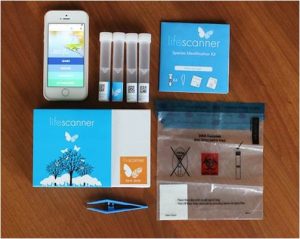
LifeScanner Kit
Feeling inspired and innovative yet? We thought so! The best part about the International Barcode of Life project is that anyone can contribute to it, as well as access the data (found online at BOLD). Classroom projects and programs ranging from DIY lab studies, participating in the School Malaise Trap Program, and submitting a LifeScanner kit for analysis are some of the many ways that students can contribute valuable data to iBOL!
Through these innovative citizen science initiatives, BIO hopes to inspire students to contribute to, and prepare for, a bioliterate future. Although we live in a fast-paced and rapidly changing world, DNA barcoding is a key piece of technology that will help us to slow down and truly assess, protect, and monitor all levels of biodiversity found around us.
We are pleased to announce the winners of our #SMTPselfie contest! Thank you to all who entered, and don’t worry…we’ll have another contest as soon as you receive your School Malaise Trap Program results! The winners for the #SMTPselfie contest will receive a LifeScanner Kit which is a new tool for exploring the biodiversity around you. This species identification kit will allow students to fill four vials with a whole organism or a piece of tissue and send it back to BIO for analysis!
And without further ado…the winners of the #SMTPselfie contest are:
1) Jack Chambers Public School
2) St. Charles College
3) Forest Avenue Public School
4) St. Paul Elementary School
5) Monsignor Doyle Catholic Secondary School
Congratulations to the winners, and a big thank you to all who participated! The LifeScanner Kits have been mailed and are on their way to you!
We look forward to sharing the School Malaise Trap Program results with you soon!


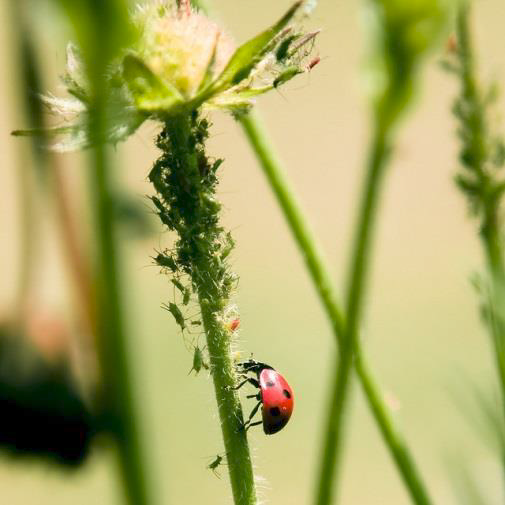 Aphids are small, soft-bodied insects with sucking mouthparts called stylets that allow them to pierce plant tissue and suck out the sap. Depending on the plant species and extent of the attack, aphid feeding can lead to yellowing, curled leaves, stunted growth, and even death. The soybean aphid (Aphis glycines) was one of the most widely collected species of aphid, being found in traps at 21 different schools, primarily in Ontario. The soybean aphid is native to Asia but it has become a serious pest of soybean in North America since 2000. Interestingly, the Halloween lady beetle (Harmonia axyridis), which can help to control the soybean aphid and is also an introduced species, was collected at 18 schools in this Fall program.


 The results are in for the Fall 2014 School Malaise Trap Program and they are truly remarkable! This Fall marked the first nationwide offering of the program, with students from across Canada exploring the biodiversity in their schoolyards and discovering how we can use
  Not only were your collection numbers astounding, your species discoveries were even more exciting! Over the next few weeks the SMTP team will be highlighting your discoveries through our blog posts and we hope that you will do the same! First off, let’s get a sense of what you collected in your