
Wasps (Order: Hymenoptera)
The Hymenoptera are one of the largest orders of insects, comprising the sawflies, wasps, bees and ants. Over 150,000 species are recognized, with many more remaining to be described. The name refers to the wings of the insects, and is derived from the Ancient Greek ὑμήν (hymen): membrane and πτερόν (pteron): wing. During the Fall 2014 School Malaise Trap Program you collected 1058 species of Hymenoptera across all participating schools. We have highlighted some of your interesting finds below.

Fairyflies, despite their name, are actually very tiny wasps, and can be found in temperate and tropical regions throughout the world. They average only 0.5 to 1.0 mm long and they include the world’s smallest known insect, the Alaptus fairyfly, with a body length of only 0.139 mm, and the smallest known flying insect, at only 0.15 mm long.
While many insects form complicated social groups – think of ants and bees, for example – the fairyfly is just the opposite. Although they get together for mating, there’s no courtship and no family groups among fairyflies. This makes them relatively hard to study, which is why much of their behavior is still a mystery to scientists.

Fairyflies are some of the most common chalcid wasps, but are rarely noticed by humans because of their extremely small sizes. This apparent invisibility, their delicate bodies, and their hair-fringed wings have earned them their common name. Their adult lifespans are very short, usually lasting for only a few days. All known fairyflies are parasitoids of the eggs of other insects, and several species have been successfully used as biological pest control agents.
Fairyflies were abundantly caught during the Fall 2014 School Malaise Trap program, with specimens being collected at 49 of the 59 participating schools!
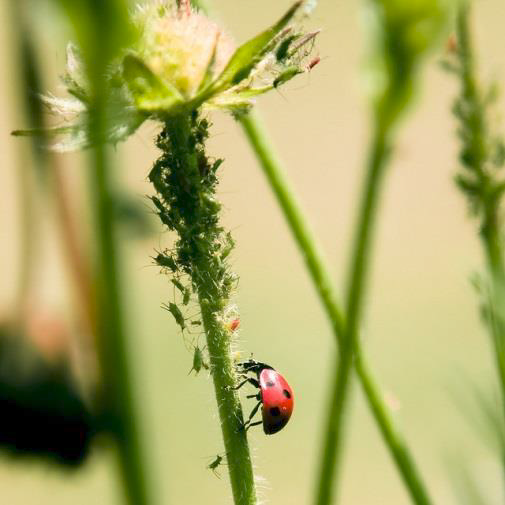 Aphids are small, soft-bodied insects with sucking mouthparts called stylets that allow them to pierce plant tissue and suck out the sap. Depending on the plant species and extent of the attack, aphid feeding can lead to yellowing, curled leaves, stunted growth, and even death. The soybean aphid (Aphis glycines) was one of the most widely collected species of aphid, being found in traps at 21 different schools, primarily in Ontario. The soybean aphid is native to Asia but it has become a serious pest of soybean in North America since 2000. Interestingly, the Halloween lady beetle (Harmonia axyridis), which can help to control the soybean aphid and is also an introduced species, was collected at 18 schools in this Fall program.


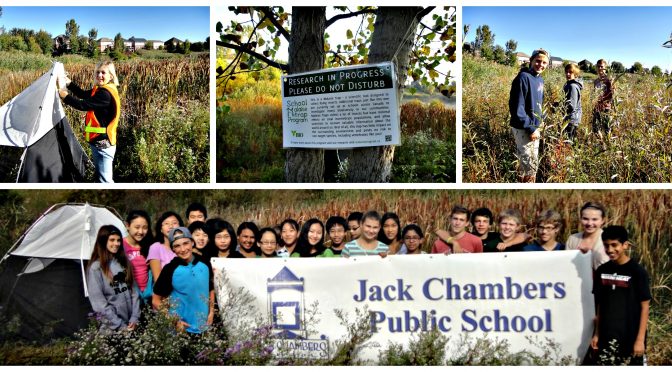

 The results are in for the Fall 2014 School Malaise Trap Program and they are truly remarkable! This Fall marked the first nationwide offering of the program, with students from across Canada exploring the biodiversity in their schoolyards and discovering how we can use
 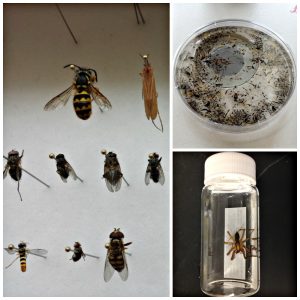 Not only were your collection numbers astounding, your species discoveries were even more exciting! Over the next few weeks the SMTP team will be highlighting your discoveries through our blog posts and we hope that you will do the same! First off, let’s get a sense of what you collected in your